What Is PU Leather? An Honest FAQ on Standard Textile Fabrics and Luxury Curtain Fabric
-
What Is PU Leather?
-
Is PU Leather Basically Plastic With a Marketing Budget?
-
How Do Standard Textile Fabrics Differ From "Premium" Ones?
-
What Actually Makes Luxury Curtain Fabric "Luxury"?
-
What Do Most B2B Fabric Buyers Get Wrong?
-
When Is PU Leather the Wrong Choice?
-
What Should I Ask Before Placing a Standard Textile Order?
-
Honestly, Who Should NOT Buy From Us?
What Is PU Leather?
PU leather — polyurethane leather — is a synthetic fabric built around a backing material, usually knit or woven polyester, coated with a polyurethane layer. It's engineered to look and feel like leather without using animal hide. The category is broad: a 0.6mm budget upholstery PU and a 1.4mm technical automotive PU share a name and almost nothing else.
I've been handling B2B fabric orders for eight years. I've documented 14 significant mistakes that together cost us around $23,000. A number of them circle back to one issue: treating a broad category name as if it were a fixed specification. "PU leather" on a purchase order is a starting point. Not a final answer.
Is PU Leather Basically Plastic With a Marketing Budget?
Sort of. But that framing misses why the good stuff works. A quality PU leather has a woven backing, a flexible adhesive layer, and a PU topcoat thick enough to handle abrasion without cracking. The cheap end of the market uses thin knit backing and a PU film that cracks in 12–18 months.
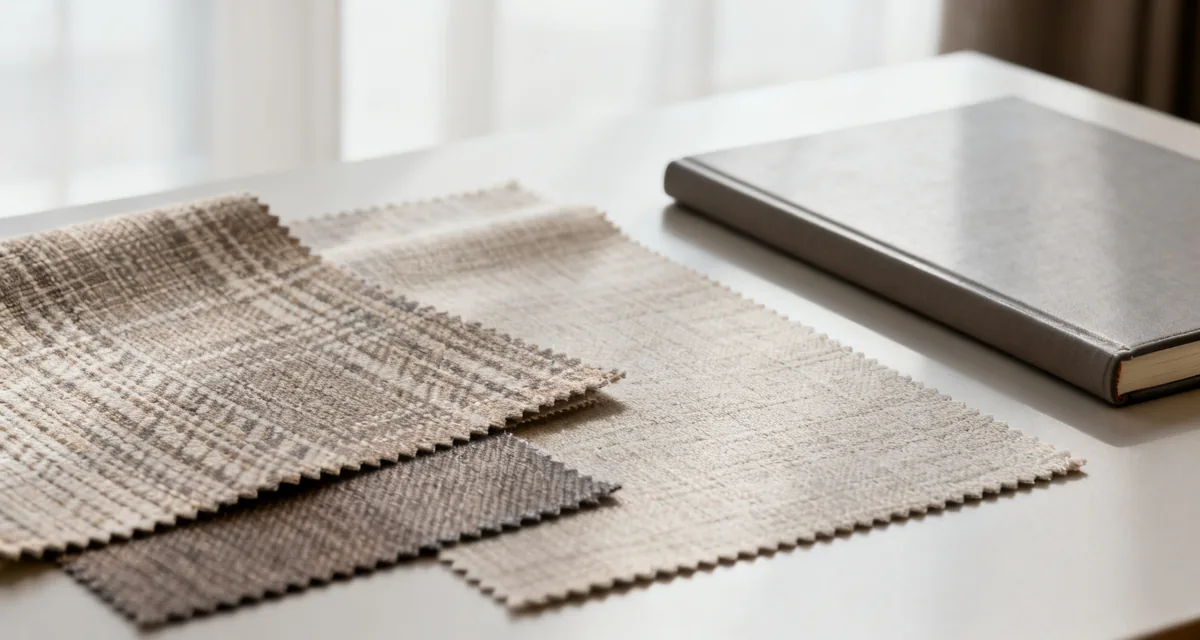
I approved a PU leather order in September 2021 based on a hand-sized swatch. Looked and felt right. When the rolls landed, the surface had a slight gloss the swatch didn't show. The swatch came from the center of the roll; the shipment carried outer wraps. Roughly $1,900 in redo costs, plus a client who now requests photos of every swatch position.
Ask which part of the roll your swatch was cut from. If the supplier can't answer that, you've learned something.
Not every supplier is hiding something. Some simply don't track it. But when PU leather is going into furniture or hospitality products where the client will inspect every square meter, positional swatches are worth the awkward conversation.
How Do Standard Textile Fabrics Differ From "Premium" Ones?
Honestly? Sometimes the difference is measurable. Sometimes it's a color card.
Standard textile fabrics — the bread-and-butter wovens, knits, and blends most B2B orders involve — are specified by weight (GSM), composition, weave, and finish. Premium fabrics typically add tighter tolerances, better dye consistency, and more predictable shrinkage after washing.
But here's the trap I fell into in 2022: I assumed "300 GSM" meant the same thing across two suppliers. It doesn't. One mill measured greige weight; the other measured after finishing. Same number on the spec sheet. Different fabric in my hand. The upholstery order came in about 9% heavier than expected, and we had to rework the cutting plan.
Standard textile specs are a language, not a universal truth. Always ask how a mill measures.
What Actually Makes Luxury Curtain Fabric "Luxury"?
Three things, in order: drape, weight, and color consistency. Not the label.
Luxury curtain fabric tends to hang cleanly without ballooning, has enough grams per square meter to fall in straight folds, and holds color evenly across the whole bolt. A fabric can have a beautiful sheen and still fail all three.
I went back and forth for two weeks on a linen-blend blackout option versus a heavier triple-weave. The linen blend photographed better and had a softer hand. The triple-weave had a more reliable blackout rating and better drape. I chose the linen blend.
It arrived fine. It hung fine. Then the client called six weeks later because the panels were showing light through the weave. Not a defect — just physics. The "luxury" fabric didn't meet the actual performance need. The cheaper-feeling option would have.
If blackout performance matters, ask for a test report. Not just "blackout" on the label.
What Do Most B2B Fabric Buyers Get Wrong?
Four things, in my experience:
- Skipping the lab dip. I did this once on a repeat order in 2023. Red came back orange on 8,000 meters. Color correction cost about $4,000 and two weeks. I now require a lab dip on every repeat, even if the formula is "unchanged."
- Approving a swatch without asking where it came from. Covered above. Still the most common one.
- Choosing on price per meter alone. Freight, duty, redo risk, and delay penalty never appear on the initial quote but always show up later.
- Assuming "same spec" means "same result." Different mills, different measurement methods, different outcomes. Same word on the purchase order.
None of these are exotic mistakes. They're boring, expensive, and completely avoidable with a checklist.
When Is PU Leather the Wrong Choice?
If the end product will see heavy daily abrasion in a commercial setting, the budget end of PU leather might not last. If your client expects the material to develop a patina over time, PU won't deliver that. And if the product needs to pass flammability or chemical-content certifications for a regulated market, verify that the exact PU you're ordering comes with the paperwork — don't assume the category covers it.
I recommend PU leather for hospitality seating, residential upholstery, bag and accessory applications, and technical uses where the specific grade matches the wear requirement. I don't recommend it for projects where "leather" is a promise, not a material category.
Simple honest rule: if the buyer has to be talked into PU leather, they probably shouldn't buy it.
What Should I Ask Before Placing a Standard Textile Order?
A short list I'd hand anyone in year one:
- How does your mill measure fabric weight — greige or finished?
- Where was my swatch cut from on the roll?
- Can I get a lab dip before bulk production?
- What's the color tolerance — Delta E below 2, or looser? (Industry standards treat Delta E under 2 as tight for brand-critical colors; 2–4 is noticeable to trained eyes.)
- What's the redo policy if bulk doesn't match the approved sample?
That last one matters more than any other. Most suppliers won't put it in writing unless you ask.
Honestly, Who Should NOT Buy From Us?
If you need a physical sample in your hands within 24 hours, we're not the fastest option. If you're ordering under 100 meters and expect mill-direct pricing, you'll probably do better locally. And if you need a guarantee that our PU leather will match a specific leather sample you already own — we can't promise that. We can get close. Close isn't identical.
I've learned that saying this upfront saves everyone time. My job is not to push you into every order. It's to keep you from making the mistakes I already made.
Permanent link: /blog/what-is-pu-leather-an-honest-faq-on-standard-textile-fabrics-and-1.html

Jane Smith
I’m Jane Smith, a senior content writer with over 15 years of experience in the packaging and printing industry. I specialize in writing about the latest trends, technologies, and best practices in packaging design, sustainability, and printing techniques. My goal is to help businesses understand complex printing processes and design solutions that enhance both product packaging and brand visibility.