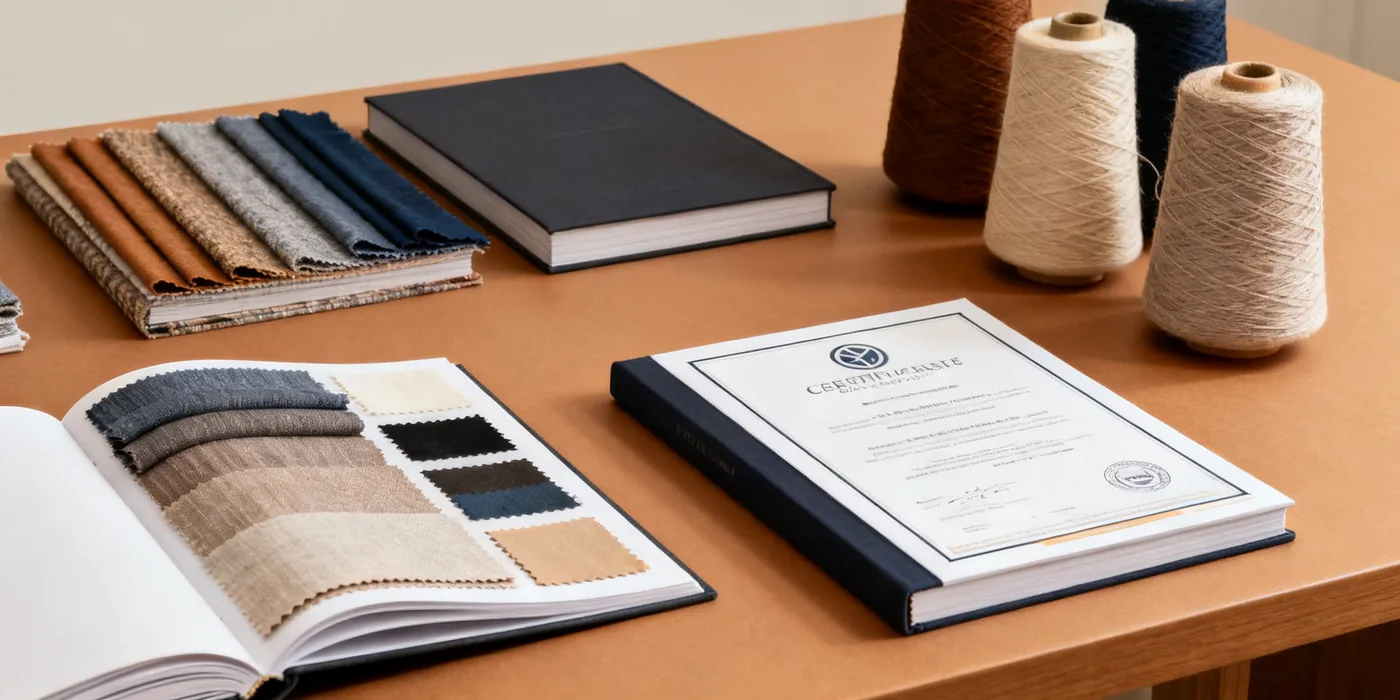
Discuss the physical material
Composition is the opening noun, not the whole description. A contract velvet, a chenille, a jacquard and a plain drapery cloth can share a fibre list and still differ in pile, float and backing. Mass per unit area comes next, with the unit written out, because a target GSM is a discussion point until a cutting and a method sit beside it.
Usable width is the cuttable measurement the pattern can spend. It is not the full cloth width when a selvedge has to be discarded. Finish language should stay visual and specific: a stain treatment, a calendered face, a knit backing or a laminated support, each named only when it is on the reference. Yarn count and denier stay in their own units. They are not swapped for GSM to make a brief look complete.
Shade language needs the same care. A lab dip is a colour trial. A shade band is an agreed window. A lot approval is a decision about a particular production group. Writing “close enough” without the cutting leaves the next reader free to invent a standard. The dated reference and the proposed specification should be compared in the same light, with the difference written down before anyone calls the cloth approved.
Discuss the intended use
Contract seating, window coverings and interior panels ask different questions of the same fibre. Seating cares about surface wear, seam behaviour and how the face feels after handling. Drapery cares about drape, light and the width the heading can use. A wall panel cares about stability and how the cloth sits once it is fixed. Those are selection contexts, not completed installations and not client case studies.
Care and exposure decide which evidence is relevant. Colourfastness to light matters more beside a window than it does inside a closed storage panel. Abrasion matters more on a seat. Neither result replaces a handle review. If a report is offered later, its method and specimen condition have to match the use. A number copied from a different construction does not become evidence because the brand name is familiar.
The commercial role of this site stays narrow. Enquiries are about home and contract textile fabrics. Finished bedding, towels and other made-up goods are outside that scope even when a cloth could be cut for them. Company size, plant output, certificate ownership and distribution rights are not stated here because they are not established on this page. Claim wording, when it appears, is reviewed on the claim reading page, and consistency questions sit on Quality & Consistency.