Lyocell vs. Viscose: What Standard Textile Fabric Buyers Actually Need to Check
Short answer first
Lyocell and viscose are both regenerated cellulose fibers, and both usually start as wood pulp. But they are not interchangeable in production—lyocell holds up better to washing and mechanical stress; viscose drapes better and costs less at the mill. If you're sourcing what most B2B buyers call standard textile fabrics for an apparel or home textile program, mixing these two up is one of the most expensive "small" errors in the category. I know because I made it.
On a 2,400-meter viscose order in 2019, our post-wash shrinkage came back at 7.2% when the approved spec said 3% max. That single line item cost us $1,840 in rework and a repeat customer who never came back.
Why you should trust this warning
I've handled fabric sourcing and production orders for B2B apparel and home textile clients for nine years. In that time I've personally approved around 60,000 meters of cellulosic fabric—some of it well, some of it badly. The 2019 shrinkage problem was my worst miss, but it wasn't my only one.
Actually, I was warned. A senior merchandiser told me in 2018 to always run a pre-shrink test on any new viscose source before signing off. I nodded, then skipped it on this order because the mill had a nice presentation deck and a competitive quote. That's the reverse-validation lesson I keep paying for: the advice you ignore is usually the one that finds you.
In Q1 2021, I made a related error. I assumed a viscose/lyocell blend would behave like pure viscose because the pulp source was similar. It didn't. The hand-feel came out flatter than the sample we'd signed off on, and the client noticed before we did. We re-cut a 600-piece order at $3.10 per garment—roughly $1,860 in extra cost for a fabric substitution that "looked the same" on paper.
That was the moment I stopped treating fiber names as marketing labels. They're specifications.
What is viscose fabric, actually?
Viscose is a regenerated cellulose fiber made by dissolving wood pulp (usually eucalyptus, beech, or pine) in a chemical bath, then extruding it into filament. In North America you'll often see it labeled as "rayon" on the care tag—rayon remains the official disclosure term for most viscose under the FTC's Textile Fiber Products Identification Act, which requires apparel sold in the U.S. to name fiber content by percentage.
What viscose does well:
- Soft, fluid drape (this is why it shows up in dresses and blouses)
- Good moisture absorption
- Low cost relative to other cellulosics
- Takes dye easily
What it doesn't do well:
- Weak when wet—often 40–50% lower wet strength than dry
- Prone to shrinkage unless the mill pre-shrinks or finishes it properly
- Wrinkles and can lose shape over repeated laundering
- Lower abrasion resistance than lyocell
None of that makes it bad. It makes it specific. A viscose dress lining is fine. A viscose workwear shirt that gets washed 50 times is not.
Lyocell fabric characteristics (and where it differs)
Lyocell is also regenerated cellulose, but the solvent is different. Instead of the xanthation process used for viscose, lyocell uses an amine oxide solvent (NMMO) in a closed-loop system. Lenzing—the company behind the Tencel brand—reports solvent recovery rates above 99% for that loop, which is the main reason lyocell is often described as the cleaner cellulosic.
Where lyocell fabric behaves differently from viscose:
- Wet strength stays much closer to dry strength, so it holds up through home laundering
- Shrinkage is lower and more predictable under standard finishing
- Abrasion resistance is higher—noticeably better for pants, uniforms, and upholstery
- Hand-feel is smoother and more uniform; it doesn't pill the same way
- Cost is higher—in my buying experience, lyocell quotes ran 25–40% above comparable viscose between 2021 and 2023
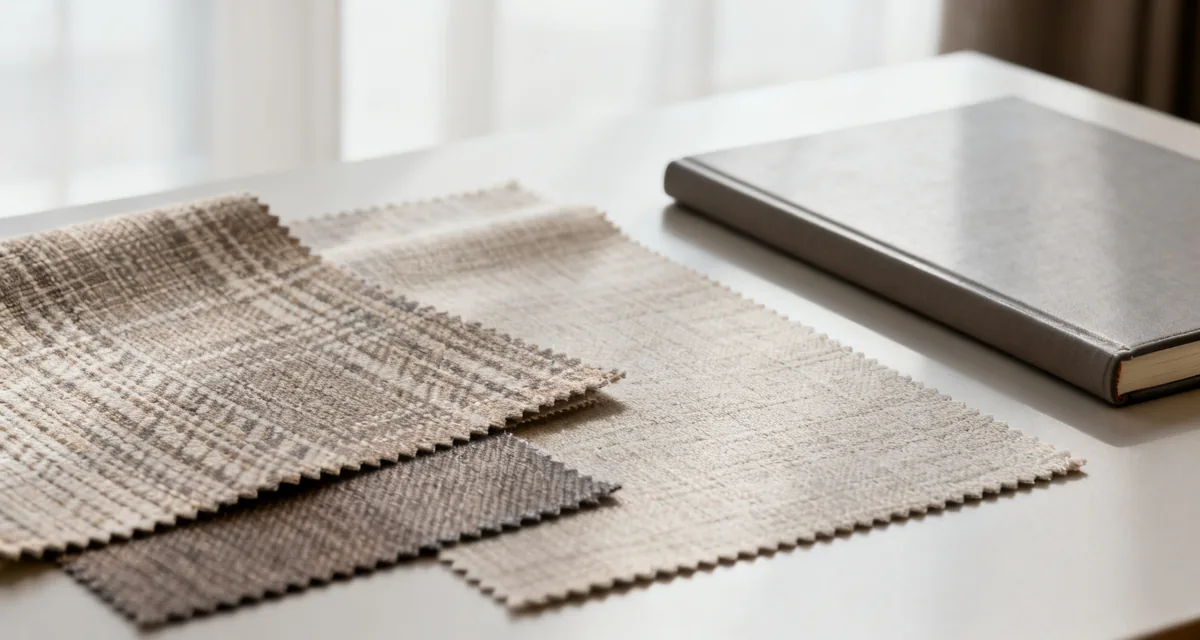
When I compared lyocell and viscose swatches side by side after a full wash cycle in 2020—same 180 gsm, same dye lot category, same finishing steps—the difference wasn't subtle. The viscose sample had clearly shrunk and stiffened. The lyocell sample looked like it had barely changed. That's when I stopped thinking of them as "premium vs. economy" and started thinking of them as different tools.
The counterintuitive bit
Here's where I've changed my position over the years. I used to assume that standardizing on lyocell for every order was the safe upgrade. It isn't. On a fluid-viscose dress program in 2022, we tested lyocell as a substitute and the drape changed enough that the designer rejected it. The genuine viscose—cheaper, yes—was the right fiber for that garment. We ended up keeping viscose there and using lyocell only for the shirt program, where laundering was the real enemy.
So the correct read isn't "lyocell good, viscose bad." It's match the fiber to the wash cycle, the wear pattern, and the hand the design actually needs.
When the cheaper fiber is the right call
I have mixed feelings about how hard I pushed lyocell onto every program after the 2019 mess. On one hand, it genuinely solved shrinkage problems we'd been patching with pre-shrinking and higher rejection allowances. On the other hand, I overcorrected for about 18 months and wrote off viscose as a category when the real failure was my own spec sheet being sloppy about finishing requirements.
Viscose still wins in three situations for us:
- Short-life or fashion-cycle garments where the drape is the whole point and durability isn't
- Linings, interlinings, and other hidden components where cost dominates the decision
- Programs where the mill has a tested pre-shrink and finishing setup that matches our spec
The trick is not to assume the mill will "handle it." You have to put the shrinkage tolerance and wash cycle on the spec and require a pre-production lab dip or bulk shrink test—something like the compliance checks in ISO 1833 for fiber composition, but applied to your specific finishing spec. If you've ever opened a rejected shipment and thought "but the swatch looked fine," you know exactly why I'm pointing at the swatch test.
Where my expertise stops
I'm a sourcing and production person, not a textile chemist. I can't tell you how the NMMO recovery loop compares to CS2 recovery on a full LCA basis, and I'm not the right person to sign off on biodegradability claims or composting behavior. For that, use a third-party lab or a fiber supplier with published environmental data—don't let a sales sheet from me be your compliance source.
What I can tell you is how the two fibers behave on a purchase order, in a wash test, and on a customer complaint. That's the part that costs money when you get it wrong.
If you're building a standard textile spec sheet for a new program, put the fiber, the wash cycle, and the shrinkage tolerance in the same document (seriously—three fields, that's it). If a supplier answers those three questions clearly, you're already ahead of where I was in 2019.
Permanent link: /blog/lyocell-vs-viscose-what-standard-textile-fabric-buyers-actually-need-to-check-2.html

Jane Smith
I’m Jane Smith, a senior content writer with over 15 years of experience in the packaging and printing industry. I specialize in writing about the latest trends, technologies, and best practices in packaging design, sustainability, and printing techniques. My goal is to help businesses understand complex printing processes and design solutions that enhance both product packaging and brand visibility.