Why is GSM not enough?
Mass per unit area does not describe weave, pile height, jacquard structure or a backing. Two drapery cloths can share a nominal GSM and still handle differently at the window.
Contract textile selection
Home and contract fabric questions stay with composition, weave or knit structure, mass, cuttable width and the finish you can see on a cutting.
Discuss your fabric requirements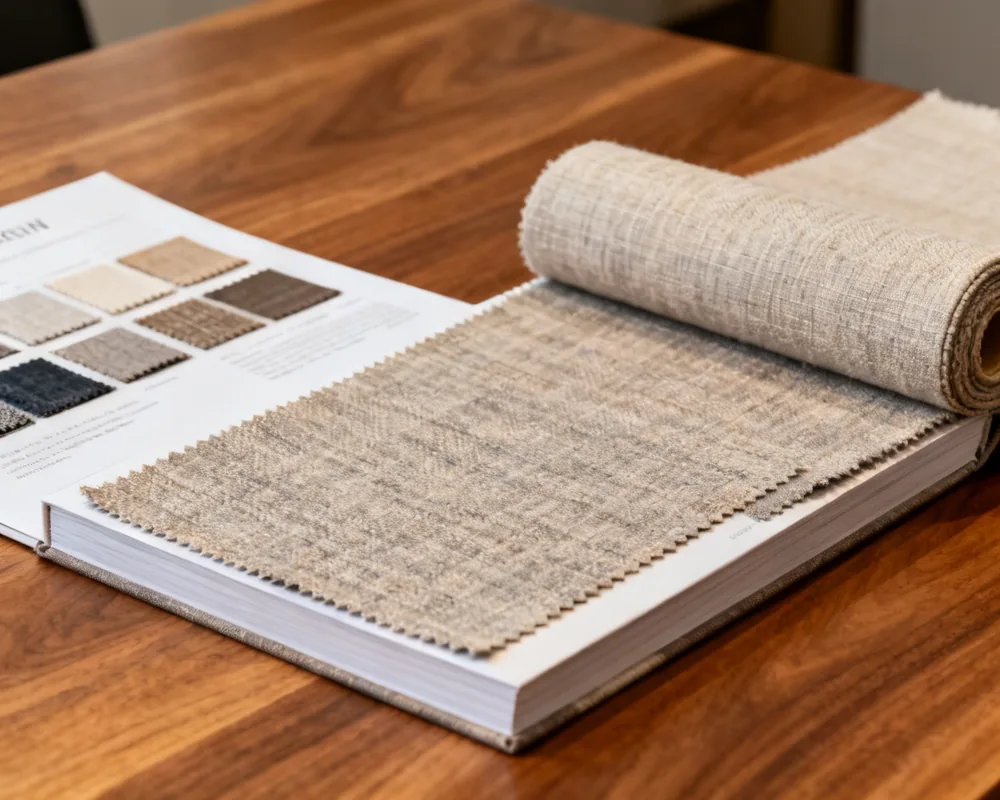
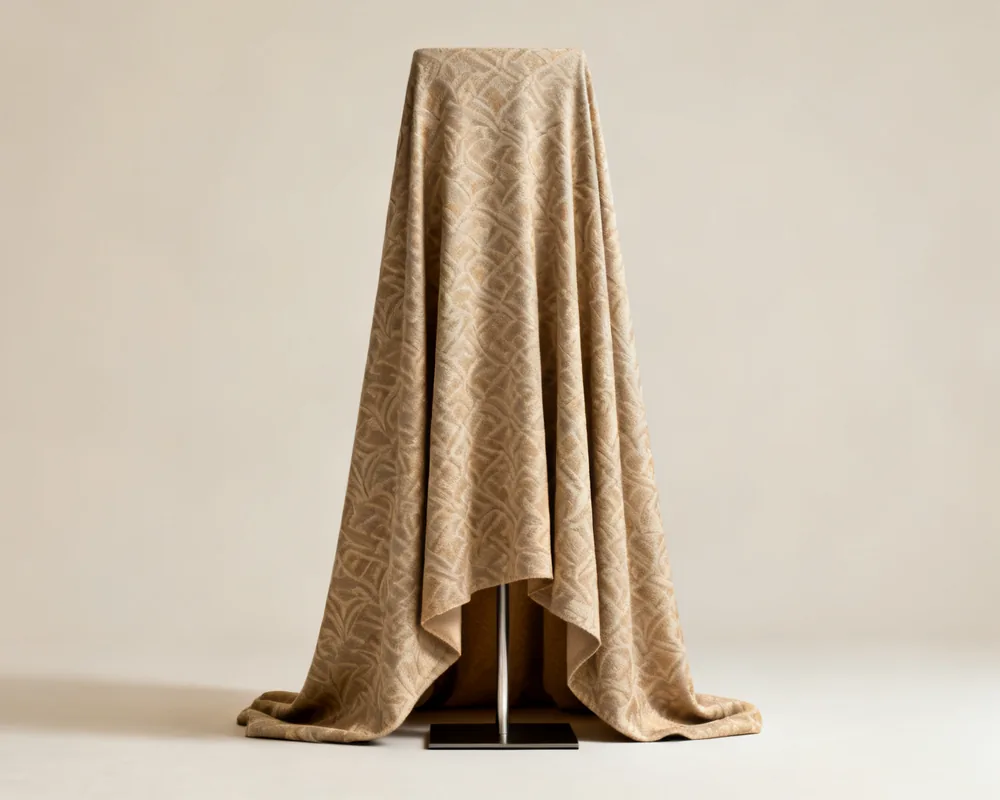
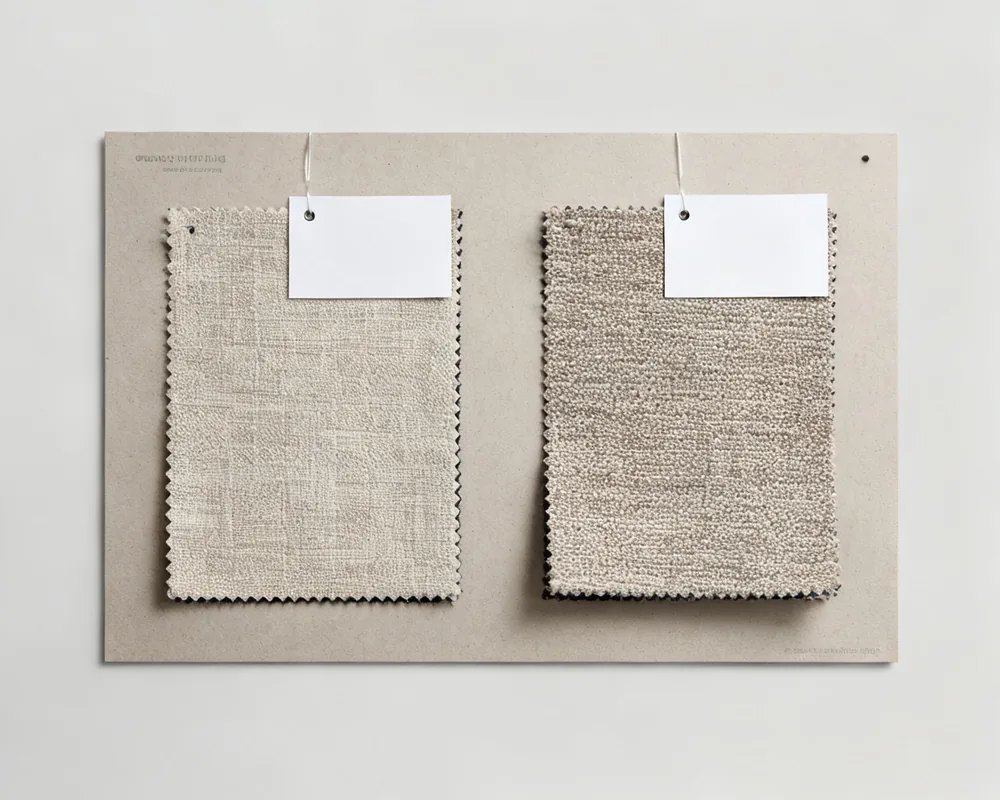
These fields organise a home or contract textile brief. They are not measured results for a named cloth.
| Field | Target question | Evidence question |
|---|---|---|
| Composition | Identify the fibre blend by mass. | Ask which declaration covers this construction. |
| GSM | Set a target mass and a tolerance to discuss. | Confirm the specimen state and the method if a figure is supplied later. |
| Usable width | Separate the cuttable area from the selvedge. | Agree the width at roll level for the interior pattern. |
| Finish | Describe backing, pile, stain treatment or other finish in view. | Check that the cutting matches the finish being discussed. |
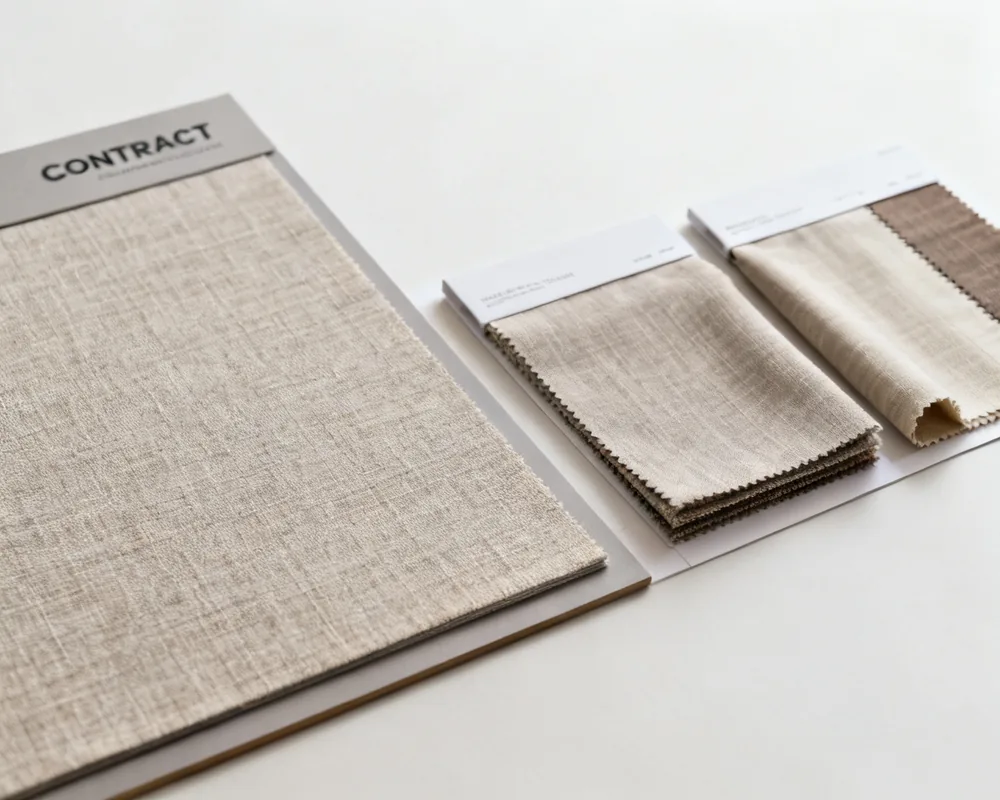
Mass per unit area does not describe weave, pile height, jacquard structure or a backing. Two drapery cloths can share a nominal GSM and still handle differently at the window.
Name the composition reference, construction, usable width and the seating or drapery use. Add the shade band or lab dip you are comparing, and the finish you expect to see on the cutting.
Only when the method, specimen condition and report scope match. Abrasion, colourfastness and dimensional stability answer different questions, and a figure from one lot does not travel to another construction.
Abrasion resistance and hand are separate targets. A durability reading needs the wear method, the end point and the specimen condition. A comfort reading needs the cutting in the hand, under the light of the seating or drapery use. One figure does not settle both. Natural and synthetic fibres are a selection split, not a ranking: natural fibres are discussed for touch and moisture behaviour, while synthetic fibres are discussed for strength, drying and a finish that has to be named. Neither side is an environmental verdict.
Bring the method, the cutting condition and the scope of any note you already have.